
FJ Solutions
ChatGPT Ads: What I’ve Learned Running Real Campaigns

I’ve been buying paid media since 2020.
I’ve run Google and Meta accounts every day since I joined FJ Solutions in 2021.
So I’ve seen plenty of “next big channels” show up and fizzle.
This one is different, it’s the first in a while that made me rethink how I plan a funnel.
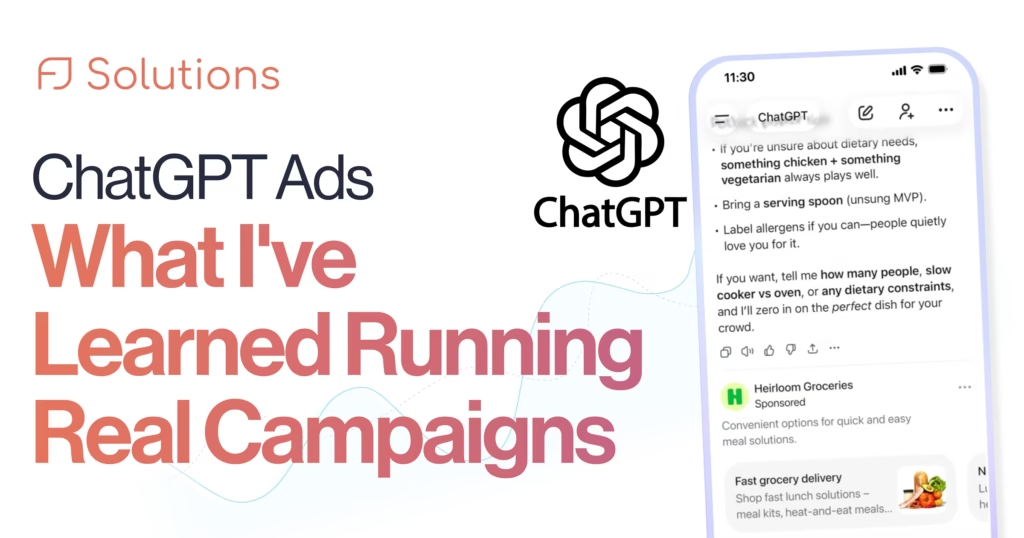
Quick context if you’ve never seen one. A ChatGPT ad is a single sponsored card that shows up below the assistant’s answer. It gets matched to what you’re actually asking about, not a keyword you bid on.
Here’s the biggest thing I learned running them. The intent is nothing like anywhere else. People aren’t scrolling. They’re mid-problem, asking real questions, and your ad lands right in that moment.
Sounds great, but there’s a catch, and it’s the one that quietly kills results: most of the payoff happens after the click, sometimes days later. If your tracking isn’t solid from day one, you’ll swear the channel is dead. It isn’t. You just can’t see what it’s doing.
More on that below, because it’s the part most people get wrong.
Why the timing matters
ChatGPT passed a billion weekly active users in 2026, and most of them are on the free tier. Only around 50 million pay.
Ads only show on the free tiers, so the audience you can reach isn’t a sliver. It’s most of the platform.
Now add that most advertisers aren’t on it yet. That window doesn’t stay open. The brands that learn it now get the head start, and at FJ Solutions, a data-driven digital marketing agency, that’s exactly the kind of edge we look for when a channel is new.
What actually makes ChatGPT Ads different
It’s not a social feed. It’s not quite search either. OpenAI started testing ads inside ChatGPT in February 2026, then opened a self-serve Ads Manager for advertisers.
A few things stand out fast.
- It matches the conversation, not keywords. Nobody’s bidding on exact terms. Your ad gets matched to what someone is working through, so if your product solves their problem, you can show up right there.
- There’s one clean ad unit. A single card, below the answer, with a business name, image, headline, and description. Only one shows at a time. Your creative has to earn that slot.
- The ad never touches the answer. ChatGPT writes its response first. A separate system picks a relevant ad after. Sponsored content doesn’t bend what the assistant says, and that’s by design.
- And not everyone sees ads. They only show on the Free and Go tiers. Plus, Pro, Team, Business, and Enterprise users don’t see any. The platform started in the US and is opening market by market.

Lead gen vs ecommerce
Works for both. You set them up differently, though. Here’s the quick map.
| Lead generation | Ecommerce | |
|---|---|---|
| Core intent | Research and problem-solving | Product discovery and comparison |
| Events to track | Leads, registrations, subscriptions | Product views, add to cart, purchases |
| Landing page | One action, tight qualification | Product feed, fast checkout |
| Watch out for | B2B clicks run expensive, so qualify early | Send amounts in minor units (129.99 becomes 12999) |
How the tracking and the pixel work
The part everyone asks about. OpenAI gives you two ways to report what happens after a click: a browser-side pixel, or a server-side Conversions API.
The pixel is called oaiq. You create a Pixel ID in the Conversions section of the Ads Manager, then drop a base snippet as high in the code as you can, on every page. It loads OpenAI’s SDK.
Now the catch that trips people up. The oaiq pixel doesn’t fire a conversion on its own when it loads. Not like the tags you’re used to. You have to call a measure event yourself, on the pages where the action actually happens, like a purchase confirmation or a completed signup.
A few things I learned the hard way:
- Amounts go in minor units. A $25.99 order is sent as 2599, with the currency attached.
- Keep the click reference. The oppref parameter ties a click to the conversion, so preserve it through any redirects.
- Match event IDs. If you run the Conversions API too, use the same event ID on both sides so you don’t double-count.
Get the pixel live first with your key events. Then layer the Conversions API on top for whatever drives real revenue, since server-to-server data doesn’t get dropped by ad blockers.


Where this fits right now
I won’t pretend it’s a finished product. ChatGPT Ads is brand new, the audience is still capped to the Free and Go tiers, and OpenAI is rebuilding pieces of it in real time, so you’re working with a platform that’s very much in motion.
But the intent quality is unlike anything else we run, and that’s what makes it worth the early mess. Getting in now is how you learn the creative and the measurement while the field is still empty, so by the time everyone else shows up, you already know what works. That head start is where the real, measurable growth comes from.
For us, that’s meant testing on our own budget before we put a client’s money behind it. If you run paid media, my honest take is to get in while it’s still this quiet, learn it properly, and be ready when it isn’t.
Frequently asked questions
Yes. Since 2026, ads show to users on the Free and Go tiers. Paid tiers like Plus, Pro, Team, and Enterprise don’t see them.
They’re contextual. Instead of keyword bidding, they match the topic of your conversation, and a single sponsored card shows below the AI’s response.
Yes. Track product views and purchases by installing OpenAI’s pixel and sending product IDs that match your feed.
No. The ad system runs separately from the model. Ads never influence the response.
This article was written by Julieta Gonzalez, Paid Media Lead at FJ Solutions.


